
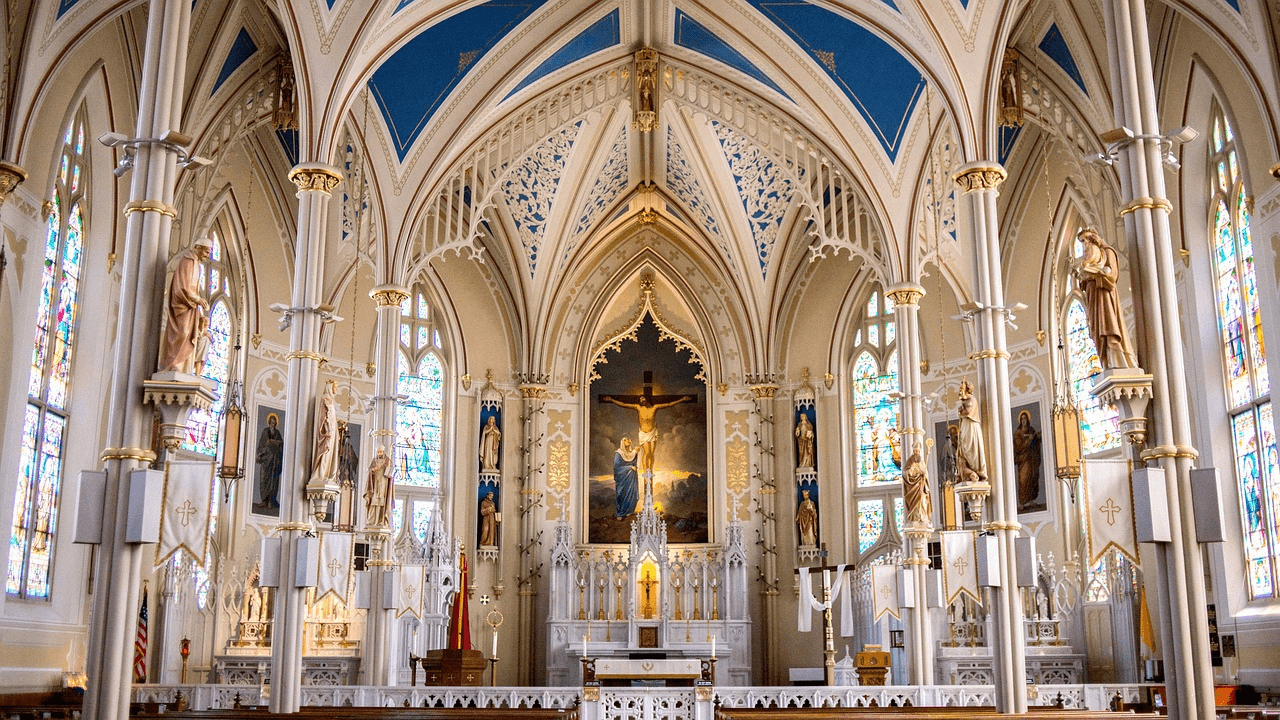
If you spend time visiting old churches, especially in Europe or the Middle East, you might notice something curious: many of them seem to face the sunrise. This tiny architectural detail often leads people to ask, “Do all churches really face east?”
The honest answer is no but the tradition behind east-facing churches is so meaningful and so ancient that it is worth understanding. And once you understand it, or know why Do All Churches Face East, you will never look at a church building the same way again.

Where Did the Idea of Facing East Come From?
Imagine believers in the early centuries of Christianity. They did not have big cathedrals, sound systems, or modern building equipment. But they did have one powerful symbol that shaped their worship: the rising sun.
For early Christians, the sunrise was not just part of nature. It represented:
- The victory of light over darkness
- The resurrection of Jesus
- The hope of His return
- A new beginning, every single day
So, when they built places of worship, they naturally gravitated toward the east the direction where light first breaks the darkness.
This wasn’t a rule written in stone. It was a symbol of hope, a way to shape the building around the belief that God brings new life.
Did Ancient Christians Require Churches to Face East?
Not exactly. There was no universal law saying a church must face east.
But the tradition became so strong that many communities adopted it automatically.
Think of it like this:
Just because most people cut a birthday cake does not mean there is a law commanding it.
It is simply a tradition that carries meaning.
Church builders followed the same pattern. And that is why so many historic churches especially those built between the 4th and 14th centuries have eastern-facing altars.
Why Do All Churches Face East?
The east is not just another direction. In Christian tradition, it has layers of symbolic meaning for the question Do All Churches Face East? :
1. The Resurrection
Jesus rose at dawn, and dawn comes from the east.
Facing east was a way of aligning worship with resurrection hope.
2. The Second Coming
Many early Christians believed Christ would return “like lightning from the east” (Matthew 24:27).
Facing east helped believers pray with expectation.
3. Turning Toward the Light
Physically facing the sunrise reminded worshippers to seek God’s light in a dark world.
It was not about compass directions it was about heart direction.
But… Not All Churches Followed This Pattern
Here is the part most people do not realize: geography and reality did not always cooperate.
Many churches could not face east because of:
- Limited building space
- City streets already laid out
- Nearby rivers or cliffs
- Land donated in awkward shapes
- Climate or structural concerns
- Local building regulations
In these situations, the church still held the symbolism of light and worship even if the walls didn’t perfectly align with the rising sun.
This proves an important point:
Orientation never defined the value of worship. The direction of the heart mattered far more than the direction of the building.

Different Christian Traditions Handle This Differently
1. The Catholic Church
Historically, Catholic churches tried to place the altar toward the east.
But modern Catholic churches especially in cities focus more on:
- Seating capacity
- Parking
- Accessibility
- Acoustic design
- Community needs
So many newer churches face whatever direction makes practical sense.
2. The Eastern Orthodox Church
The Orthodox tradition is more consistent.
Most Orthodox churches still face the east whenever possible, because the symbolic meaning is deeply rooted in their liturgy.
3. Protestant Churches
Protestant architecture varies widely.
These churches usually focus on:
- Visibility
- Practical layout
- Multipurpose use
- Local constraints
So many Protestant churches face all sorts of directions.
Why This Question Still Matters Today
In a world filled with technology, apps, and constantly changing trends, this old question “Do churches face east?” reminds us of something powerful:
Human beings have always looked for ways to express faith physically.
Where we face, how we gather, or Do All Churches Face East? how we build it all reflects what we believe.
Even if modern churches do not follow the east-facing tradition strictly, the heart of the idea still stands:
- Worship points us toward hope.
- Faith begins in the darkness and meets the sunrise.
- Tradition carries stories that shape how we pray today.
The meaning is bigger than the compass.
So, what is the Final Answer?
No, not all churches face east.
But many old churches do because eastern orientation symbolized resurrection, hope, and Christ’s return.
Some modern churches still follow the tradition. Many do not.
And that is okay because the direction of the building does not determine the depth of faith.
The tradition continues not because it is required, but because it is beautiful.
opening prayer for church meetings

Role: Founder & Spiritual Writer at TheGodMessage.com
About: Himanshu is a Jesus-centered writer known for creating clear, uplifting, and Bible-rooted content for modern believers.
Expertise: specializes in prayers, devotionals, and spiritual guidance designed to help readers grow stronger in faith no matter where they are in life.
Purpose: His mission is to inspire readers to connect with their inner self, experience peace, and understand the messages of the universe. “My mission is simple, to bring God’s light into your everyday life.”